
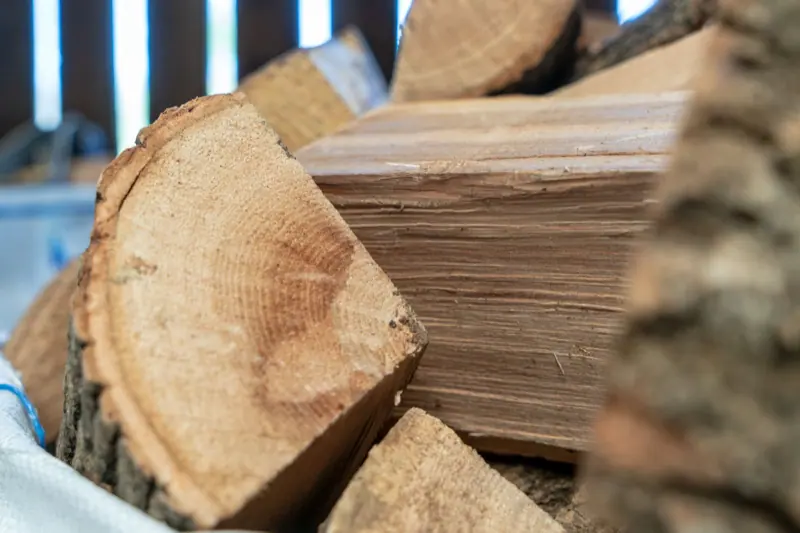
Logs are dry enough to burn when their moisture content is 20% or less. The surest check is a moisture meter used on a freshly split face, not on the outside of the log. Without a meter, look for cracked ends and loose bark, and compare weight and sound: drier logs feel lighter and knock hollow. Logs sold with the Ready to Burn label have already been certified at 20% or less.
Why 20% is the line.
Defra's guide to buying, storing and seasoning wood says most modern stoves are designed to get the most from wood at up to 20% moisture. Wetter wood can be hard to light and keep alight, tar up the stove and blacken the glass, build up soot in the chimney, make a lot of smoke and give less heat. The GOV.UK notice given with large loads of wood says plainly: don't burn wood until it's at 20% or less. For comparison, HETAS says freshly felled wood is often up to 50%.
Check the label first.
In England, wood sold in volumes under 2 cubic metres must be certified Ready to Burn (GOV.UK). Certified wood comes with three things on the packaging, on the shelf or next to the price: the Ready to Burn logo, the supplier's name and a unique certificate number. Online, the logo must be shown where the fuel is advertised, and GOV.UK says you can check a supplier's details and number on the Woodsure website. Our logs are certificate WS226/00001, and our kindling WS226/00002.
The label tells you how dry the wood was when it was sold. Leave logs out in the rain and that changes, so if they've been stored badly, test them anyway.
How to use a moisture meter properly.
Defra's practical guide says moisture meters are cheap and easy to use. Used carelessly, though, they can mislead you. Here's the method, pulled together from HETAS, GOV.UK and the Forestry Commission's moisture testing guide:
- Set it up. Calibrate the meter first (GOV.UK). If it has settings for wood species or temperature, set them, and make sure it reads on a wet basis. Check the battery isn't low (HETAS).
- Pick a fair sample. Take logs from the middle of the pile as well as the top, and not ones that have been touching the ground. The Forestry Commission suggests testing at least five logs from each 2 cubic metre batch.
- Split each log. Measure on a freshly split face, and do it straight away: HETAS says the reading can change quickly once the inside is exposed. The outside of a log only tells you about its surface.
- Take three readings per log. The Forestry Commission's method is about 5cm in from each end and once in the middle of the split face, with the pins making good contact.
- Average them. Work out the average across all your readings. At 20% or under, the logs are ready.
Two things worth knowing. First, the Forestry Commission says a handheld meter of this kind gives a good indication but only ever an approximate one. Second, HETAS warns that some meters made for building work read on a dry basis, which gives a higher number for the same log. Using the Forestry Commission's definitions, a log at 20% on a wet basis would read 25% on a dry basis. Firewood is measured on a wet basis.
No meter? Five signs to look for.
Defra's Burn Better advice lists these signs that wood is ready to burn:
- Weight. Compared with a log of similar size and the same wood, a heavier one is likely to be wetter.
- Sound. Knock two logs together. A hollow sound suggests dry wood.
- Cracked ends. Cracks in the ends can show the wood is dry. GOV.UK mentions radial cracks, the ones running out from the centre.
- Bark. The looser the bark, the drier the log. GOV.UK says bark that comes off easily suggests wood that's ready.
- Colour. Dry wood can be lighter in colour.
These are clues, not proof. Use several together, and if you're still unsure, a meter settles it.
Signs in the stove.
Wet logs give themselves away once they're lit. They're hard to get going, they smoulder rather than flame, they blacken the stove glass and they make a lot of smoke (Defra and the Forestry Commission's Wood as Fuel guide). You may also hear hissing as water boils out of the wood. A fire that's short of air can smoke and sulk too, so if your logs test dry, look at how you're lighting it: our guide on how to light a wood burner covers the air controls.
If your logs are too wet.
Don't burn them yet. Stack them off the ground, under a roof with open sides, somewhere sunny and breezy, and give them time. Splitting helps: the Forestry Commission suggests splitting logs to less than 10cm across where possible, so moisture can escape from the centre. For freshly cut wood, the GOV.UK notice advises drying for at least two years, keeping the rain off in winter. Bringing split logs indoors for a few days before you burn them also helps, according to the Forestry Commission.
Our guide on how to store logs covers the set-up, and kiln-dried vs seasoned logs explains why some logs arrive ready and others need time.
Questions people ask.
What moisture content should firewood be?
20% or less. That's the figure GOV.UK, Defra and HETAS all give, and the level Ready to Burn certified wood is guaranteed to meet.
Can I trust a cheap moisture meter?
For a rough check, yes, if you use it properly: calibrate it, set it to wet basis, and measure the centre of a freshly split face. The Forestry Commission says handheld meters only ever give an approximate reading, so average several logs rather than trusting one.
Why does my meter say my logs are over 20%?
They may be wet, but check the method first. Possible reasons for a high reading include a meter set to dry basis, a reading taken on the outside of a log that has been rained on, or a meter that hasn't been calibrated or set for the right species.
Do kiln-dried logs need testing?
Not if they're certified Ready to Burn and you've kept them dry. If they've been left out in the rain or stacked on wet ground, it's worth splitting one or two and checking.
How long does wet wood take to dry?
Longer than you'd hope. GOV.UK advises at least two years for wet wood, and HETAS says hardwood generally takes between 18 months and two years. A moisture meter, not the calendar, tells you when it's ready.
What we'd suggest.
If you'd rather skip the guesswork, our logs are kiln dried to 20% moisture or less at our yard in Gargrave and certified Ready to Burn, so they can go on the fire the day they arrive. Keep them in a log store and they'll stay that way. Delivery is free on orders of £80 or more, Monday to Friday, and we text or call you when your day is booked. See how delivery works.
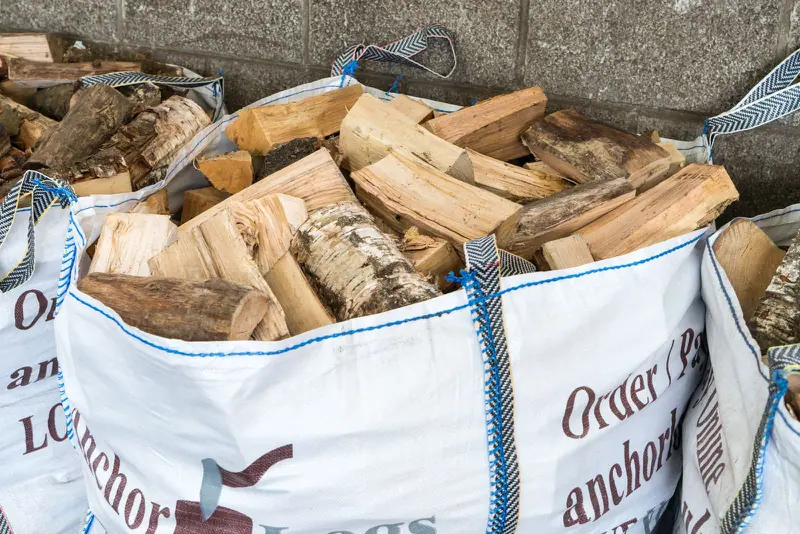
Kiln Dried Mixed Hardwoods
Our best seller. A good all-rounder for any stove.
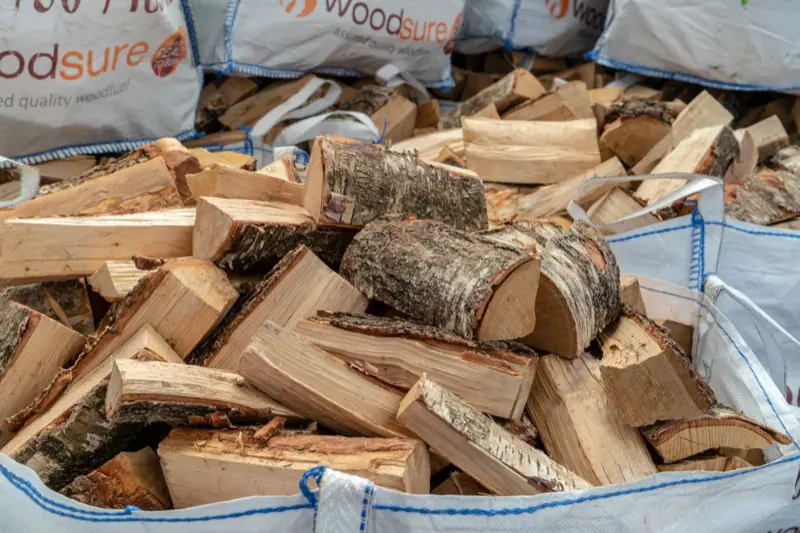
Kiln Dried Silver Birch
Lights easily, burns bright. Lovely bark.
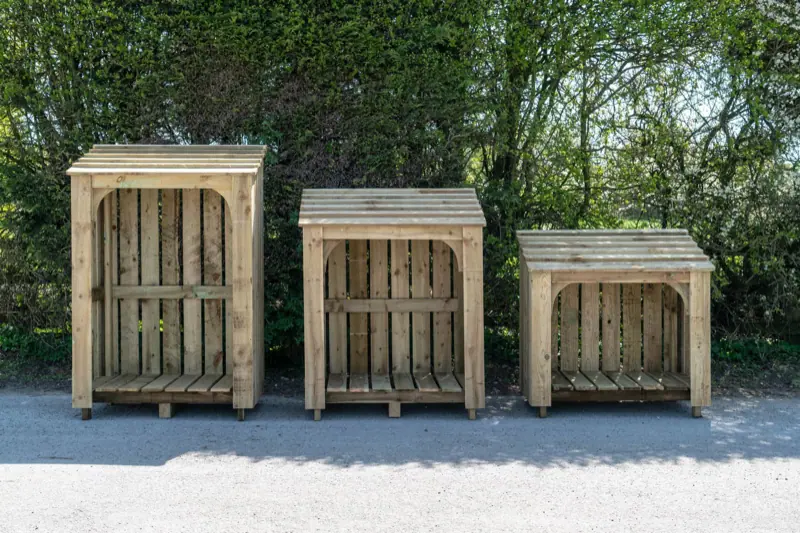
Log stores
Our own design, built by local joiners and delivered assembled. Three heights.
From £209Choose a size
Sources.
- GOV.UK: Customer notice for wood sold in volumes of 2 cubic metres or more in EnglandChecked 19 October 2026
- GOV.UK: Selling wood for domestic use in EnglandChecked 19 October 2026
- HETAS: How to check firewood moisture contentChecked 19 October 2026
- HETAS: How to season firewoodChecked 19 October 2026
- Forestry Commission (Biomass Energy Centre): Testing moisture content (simple method)Checked 19 October 2026
- Forestry Commission: Wood as Fuel, a guide to choosing and drying logsChecked 19 October 2026
- Defra: Burn Better, Breathe BetterChecked 19 October 2026
- Defra: How to get the most from your stove or open fire. A guide to buying, storing and seasoning woodChecked 19 October 2026
- Defra: Open fires and wood-burning stoves, a practical guide (April 2023)Checked 19 October 2026